


Here at L.J. Keefe Co. our industry partners are of high importance. If you are interested in working with us, please reach out.
Contact us today.
CONTACT US

847.577.7715


L.J. KEEFE CO. All Rights Reserved. Privacy Policy.
Corporate Office
704 W. Central Road
Mount Prospect, IL 60056


Experience and Knowledge




Description
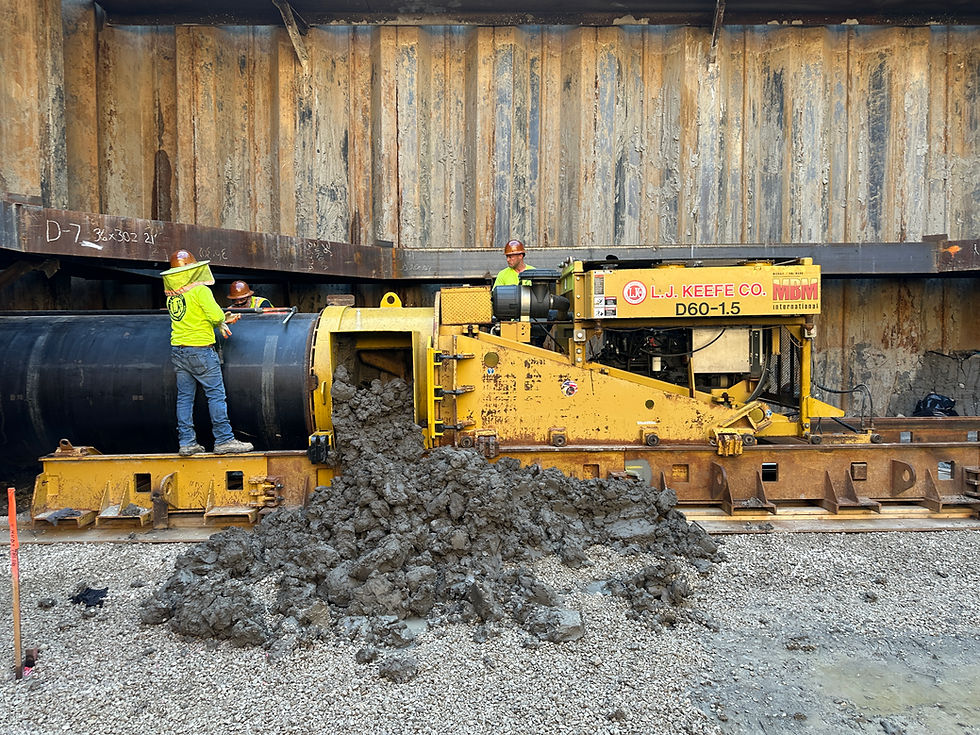
The steel casing pipe is rammed in place using a pneumatic (air-powered) ramming tool. The size of the ramming tool is determined based on the required casing diameter and the anticipated ground conditions. The tool is attached to the back end of the casing by adapter collets or a soil cone/port. The leading edge of the casing pipe is reinforced through fabrication of multiple, heavy-duty drive shoes to prevent the head from distorting or collapsing during the ramming process. Grade of the steel casing is continuously monitored by water level, and the Line is checked at regular intervals by conventional surveying instruments.
Conventional steering equipment can not withstand the force of the ramming tool. In the event that the line and grade are critical over a long distance, it is recommended that the Pipe Ramming method be used in conjunction with the Guided Boring Method. The soils within the casing pipe are removed by conventional auger boring equipment. In the event that ramming pressures become excessive during the casing installation, the soils can be removed by augering to a certain point, without affecting the heading of the casing pipe.


Application
Unlike the auger boring method, the Pipe Ramming method does not remove the soils simultaneously with the advancement of the casing. The Pipe Ramming method utilizes a pneumatic hammer attached to the end of the casing and each section of casing is 'rammed' in place.
Depending on the ground conditions, the soil inside the casing pipe can be removed by augering either during or after the installation of the entire length of casing. The ability to leave the soil inside the casing creates a plug which prevents soils from surging into the casing heading, in turn minimizing the risk of ground loss and settlement.
Soils
The Pipe Ramming method is suitable for any soils except rock.
However, this method is most typically utilized to overcome the risks posed by free flowing soils such as sand, gravel, cobbles, or when high ground water levels are present.
Casing/Pipe Material
Steel Casing Pipe
Diameter from 12" O.D. to 84" O.D.
Limited to smooth inside and outside wall made of steel pipe.
Drive Lengths
Typically ranging from 25 LF up to 200 LF. In the event that longer drives are required, the Pipe Ramming Method can be used in conjunction with the GBM to reach lengths up to 500 LF.


Description
The steel casing pipe is rammed in place using a pneumatic (air-powered) ramming tool. The size of the ramming tool is determined based on the required casing diameter and the anticipated ground conditions. The tool is attached to the back end of the casing by adapter collets or a soil cone/port.
The leading edge of the casing pipe is reinforced through fabrication of multiple, heavy-duty drive shoes to prevent the head from distorting or collapsing during the ramming process.
Grade of the steel casing is continuously monitored by water level, and the Line is checked at regular intervals by conventional surveying instruments. Note: Conventional steering equipment can not withstand the force of the ramming tool. In the event that the line and grade are critical over a long distance, it is recommended that the Pipe Ramming method be used in conjunction with the Guided Boring Method.
The soils within the casing pipe are removed by conventional auger boring equipment. In the event that ramming pressures become excessive during the casing installation, the soils can be removed by augering to a certain point, without affecting the heading of the casing pipe.

Application
Unlike the auger boring method, the Pipe Ramming method does not remove the soils simultaneously with the advancement of the casing. The Pipe Ramming method utilizes a pneumatic hammer attached to the end of the casing and each section of casing is 'rammed' in place. Depending on the ground conditions, the soil inside the casing pipe can be removed by augering either during or after the installation of the entire length of casing. The ability to leave the soil inside the casing creates a plug which prevents soils from surging into the casing heading, in turn minimizing the risk of ground loss and settlement.
Casing/Pipe Material
Steel Casing Pipe
Diameter from 12" O.D. to 84" O.D.
Limited to smooth inside and outside wall made of steel pipe.
Drive Lengths
Typically ranging from 25 LF up to 200 LF. In the event that longer drives are required, the Pipe Ramming Method can be used in conjunction with the GBM to reach lengths up to 500 LF.
Soils
The Pipe Ramming method is suitable for any soils except rock. However, this method is most typically utilized to overcome the risks posed by free flowing soils such as sand, gravel, cobbles, or when high ground water levels are present.

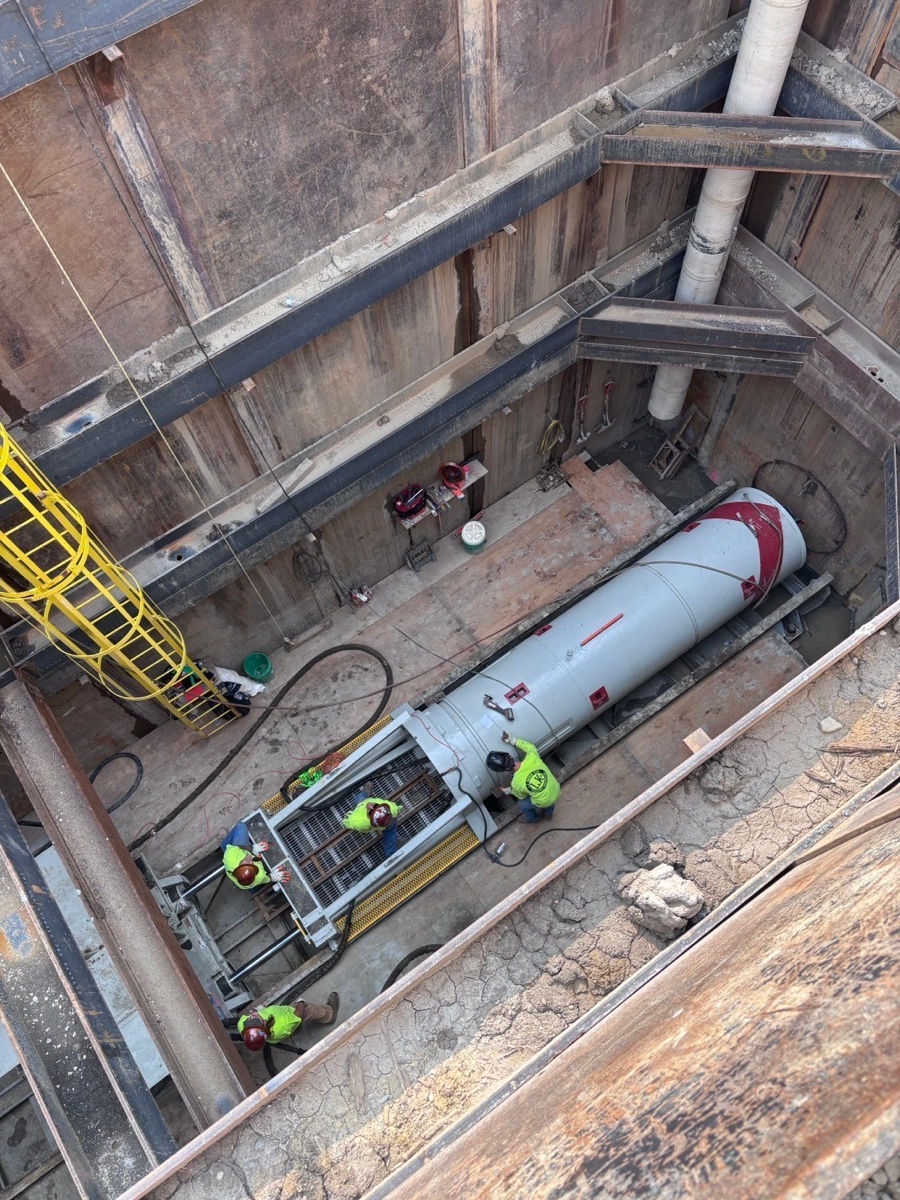
L.J. Keefe Company offers a comprehensive range of specialized services
tailored to meet the demands of tunnel construction and engineering
projects. Our seasoned professionals are equipped with knowledge,
experience, and cutting-edge technology to ensure successful execution of
tunneling endeavors.

Here at L.J. Keefe Co. our industry partners are of high importance.
If you are interested in working with us, please reach out.
Contact us today.
CONTACT US

847.577.7715

L.J. KEEFE CO. All Rights Reserved.
.png)
Corporate Office
704 W. Central Road
Mount Prospect, IL 60056